
The Situation
This is a well-established custom home builder in Oklahoma City that's been operating since the 1960s. They have a 9-person team and strong local brand recognition. From the outside, things looked fine.
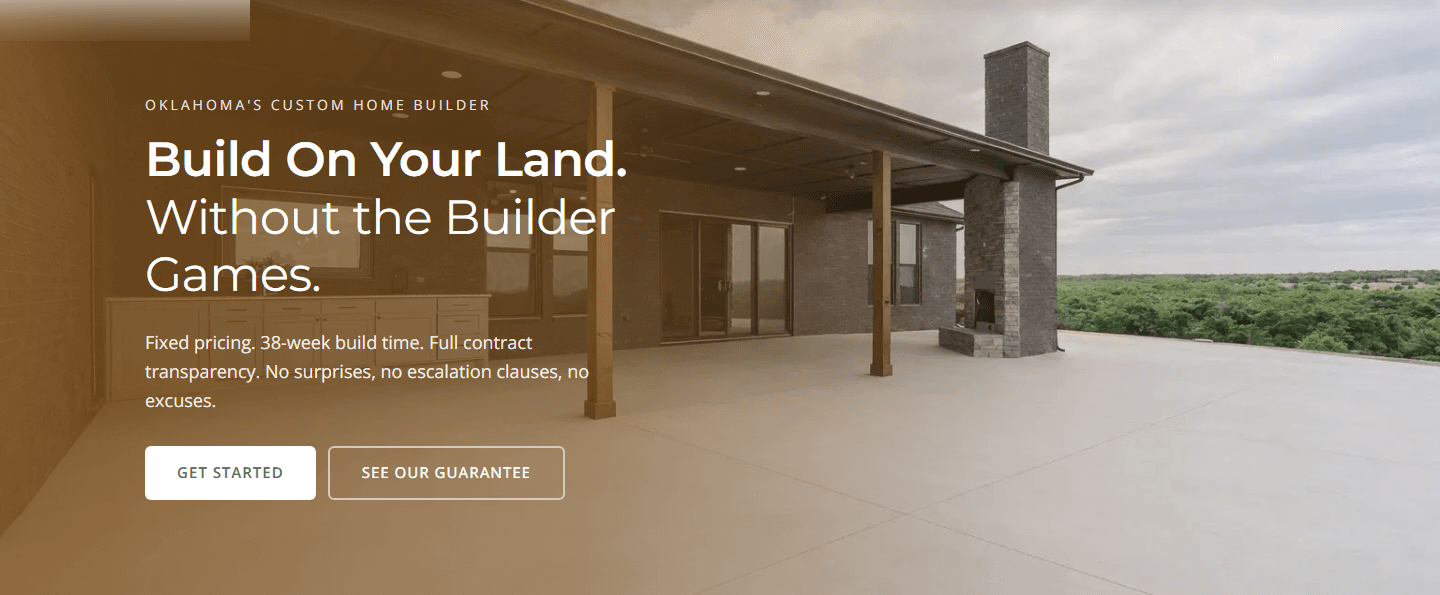
The website was the most visible problem. It was hosted inside their CRM's proprietary content management system, which meant it was functionally trapped on that platform. The styling was broken in places; old CSS, legacy HTML patterns, and an editor that made even simple changes feel like a grind. If someone on the team wanted to update a headline or swap out an image, they either fought through the editor themselves or waited for an outside developer to get to it. The site did not reflect the quality of the homes they build. It reflected the limitations of the platform it was stuck on.
On the software side, they were significantly overpaying. The CRM platform they were on was built for enterprise sales organizations, and for a team of nine people, the vast majority of features went completely unused. A second business under the same umbrella had its own separate CRM instance with the same problem. Combined, they were spending over 90% more than they needed to on platforms that didn't fit the size or shape of their operation.
What We Did
Website Migration
The site had to come off the proprietary CMS. It came up in our initial conversations and quickly became a priority because the CRM migration meant the hosting platform was going away regardless, and the state of the site made it clear this needed to happen on its own merits too.
We did a full 1:1 page migration into a modern React-based framework. Every page was rebuilt with clean, modern styling and proper responsive behavior. Critically, every URL was preserved exactly as it was. That meant Google didn't really register that a migration had happened at all; the underlying technology changed but the structure stayed the same, so there was no disruption to their search rankings or existing traffic. The result is a site that actually looks like the company it represents, loads faster, works properly on mobile, and is structured for both search engines and the way people actually discover businesses now through AI search tools.
The site rebuild was delivered in under two weeks. This was an aggressive timeline, but it needed to be because the CRM migration was already in motion and the site couldn't stay on a platform they were leaving.
AI Management Environment
Rebuilding the site only solves half the problem if the team still can't manage it without calling someone. The whole point of this engagement was to make them self-sufficient, so we built an AI environment that gives the team direct control over their own platform.
We set up a dedicated virtual machine the team dials into from anywhere, fully configured with LLM tools, a development environment, and a purpose-built interface designed for people who aren't developers. The way it works is straightforward: you describe what you want to change in plain language, the AI builds the change, and you see a live preview side-by-side with the current version so you can review it before anything goes live. It handles everything from deploying new landing pages to updating copy to adjusting forms to publishing blog posts and running keyword research.
We got on a training call with the team, about an hour long, and walked through everything together. By the end of that single session, they had updated their contact page, added a mortgage calculator, embedded training videos, restructured the navigation menu, and knocked out about four other changes that had been sitting in a backlog. That was over a month's worth of updates by their old timeline, completed in one sitting, because the AI environment removed the technical barrier that had been between the team and their own website.
The team is running the site now. When something needs to change, someone logs into the environment and handles it with AI assistance. There is no agency to call, no developer to wait on, no ticket to submit. They have the tools, they understand how to use them, and they own the entire platform.
CRM Migration and Software Consolidation
The primary business needed to get off their legacy CRM entirely. We didn't do this by hand; the migration was fully programmatic. We built an LLM-powered pipeline that connected to both platforms via API, used browser automation to handle the parts that didn't have clean API access, and moved everything over: contacts, deals, properties, workflow configurations, the full dataset. The move put them on a platform that actually fits a team their size, at a fraction of what they were paying before.
For the second business under the same umbrella, the situation was different. They didn't need a migration; they needed someone to actually look at what they were paying for versus what they were using. We reviewed the account, identified everything that was turned on but untouched, and recommended they drop the unused features and restructure their plan. That conversation alone reduced their annual spend by over 90%. No migration required, just an honest assessment of what they actually needed versus what they'd been sold.
Between both businesses, the total reduction in annual software costs was over 90%.
The Outcome
| Before | After |
|---|---|
| Website locked in a proprietary CMS with broken styling and a painful editor | Modern, responsive site on a framework the team manages through AI |
| No one on the team could make site changes without a developer or agency | AI environment where any team member updates the site in plain language |
| Oversized CRM platforms across two businesses; over 90% of features unused | Right-sized platforms at over 90% less annual cost |
| Total dependency on outside vendors for digital presence | Full ownership of website, CRM, AI tools, and marketing infrastructure |
If this had gone through a traditional agency, it would have been scoped as three separate projects: a website redesign, an AI enablement package, and a CRM migration. Each with its own timeline, its own invoice, and its own account manager. And at the end of all of it, the team would still be calling someone else every time they needed a change made.
Instead, this was one engagement. The team runs their own marketing infrastructure now. They manage their website through AI, their CRM fits their actual needs, and their digital presence belongs to them. The goal was never to become their agency. The goal was to make sure they never need one.
The operator on this team's day-to-day is one shape of a wider install. The AI agent examples show the work it takes on at other businesses, and working with an AI consultant covers how an engagement runs from the audit to the handover.
Want to see what this looks like for your business?
30 minutes. I'll walk you through the live systems and we can talk about what makes sense for your situation.
Book a growth audit